Reasonable fit
You take no regular medication, you are an adult man, and you want nutritional support alongside sleep, training and diet rather than instead of them.
Seven actives, one gummy a day, sixty days to change your mind. This is the independent JellyBlue reference — including the ingredient its own sales page never lists, the ashwagandha dose that is one sixth of the study it cites, and the nitrate warning its PDE5 claim demands.
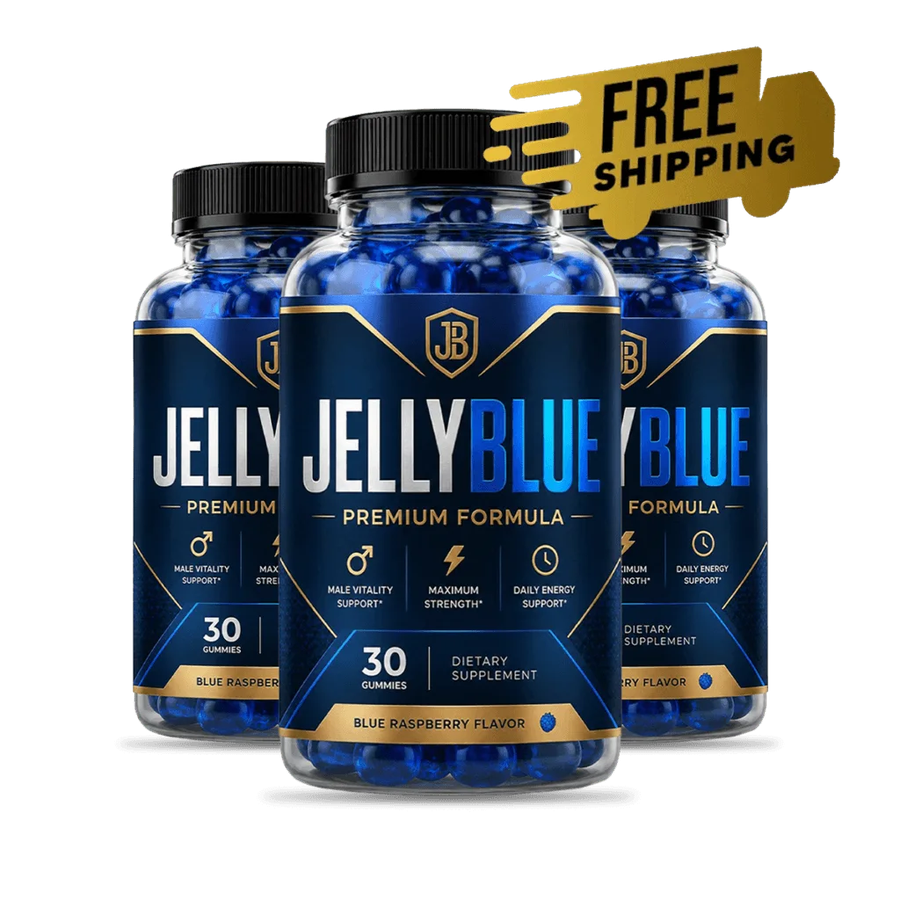
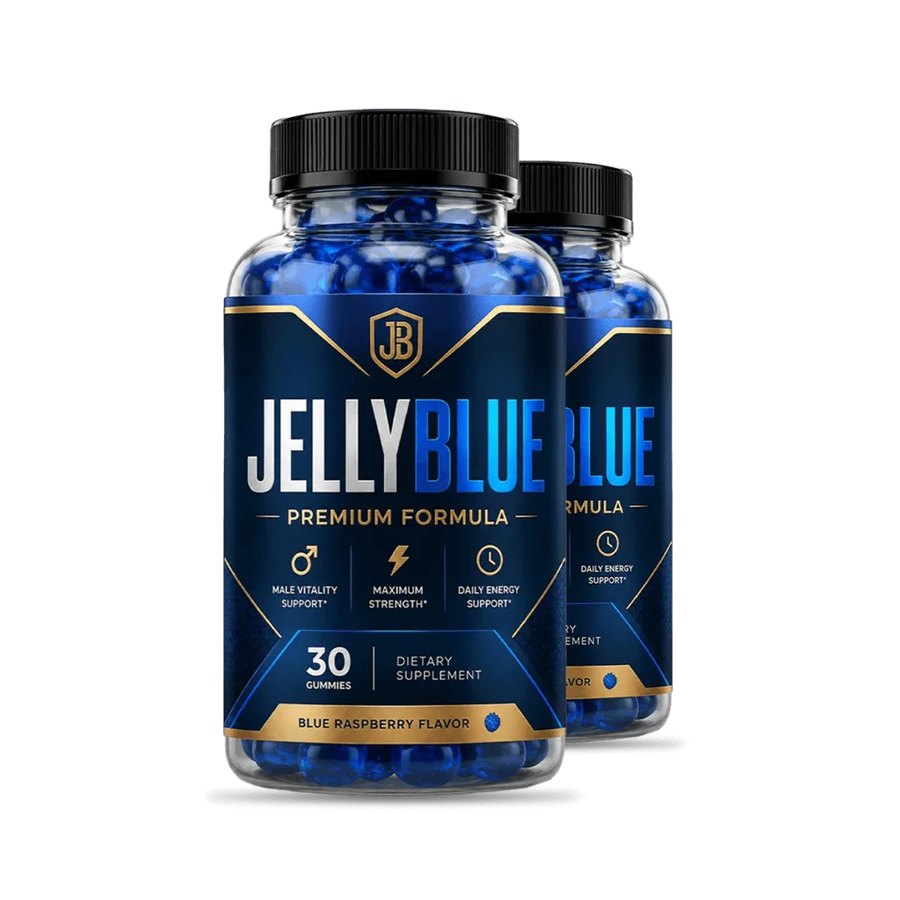
JellyBlue is a chewable gummy dietary supplement marketed to adult men for daily energy, stamina, drive and general vitality. The serving is one gummy a day and each bottle holds 30 gummies in a blue raspberry flavour, making one bottle a 30-day supply. The physical Supplement Facts panel lists seven actives: Tongkat Ali, Maca root, Ashwagandha, Horny Goat Weed, L-Arginine HCl, Beet root extract and Grape seed extract.
It is a dietary supplement rather than a medicine, and it is not FDA-approved. Packages run $158 to $294 with a 60-day money-back guarantee that carries a 30-day minimum-use condition. One ingredient is at a genuine research dose. Two disclosed doses are far below the studies the seller cites. Four amounts are not published at all.
Before anything else: the nitrate warning this product needs and does not carry. The official JellyBlue page states that Horny Goat Weed “inhibits the enzyme PDE5 — the same mechanism targeted by prescription performance medications.” If that is accurate, it matters enormously, because PDE5 inhibitors are contraindicated with nitrate medicines such as nitroglycerin and isosorbide — the combination can cause a sudden and dangerous fall in blood pressure. The formula also contains L-Arginine, an established vasodilator, on top of that. If you take nitrates, blood pressure medication or any heart medicine, speak to a pharmacist before ordering. And if fatigue or performance difficulty is new or worsening, that deserves a medical assessment — erectile dysfunction is a recognised early marker of cardiovascular disease, not merely an inconvenience.
Strip away the marketing and the proposition is simple: a navy-and-gold bottle of thirty blue raspberry gummies, one a day, aimed at men in their thirties through sixties who have noticed their energy and drive are not what they were. The gummy format is the genuine product innovation here — adherence is the hidden variable in every supplement result, and people take things they enjoy taking.
The ingredient selection is not cynical either. Tongkat ali, ashwagandha and maca are three of the most-researched botanicals in men's health, and L-arginine has a large sports-science literature behind it. Someone who understood the category assembled this list. Our page on what JellyBlue is works through the product and who it suits in detail.
What we take issue with is the gap between the claims and the panel. The page insists every compound is present “at its therapeutically effective dose” and explicitly mocks competitors for “underdosed fairy dust ingredients.” Then it cites a 600 mg ashwagandha trial while the label carries 100 mg, and describes maca research conducted at gram scale while the label carries 100 mg there too.
There is also a timing problem worth naming early. The seller recommends at least 90 days and says full benefits arrive at weeks 8–12. The refund window closes at day 60. Those two numbers come from the same page and do not fit together.
One number per ingredient: what the label delivers as a percentage of what the research uses. Where the amount is not published, we say so rather than guessing. This is the single most useful thing on this page.
The one that holds up. 200 mg daily is the dose used in most of the human trials on Eurycoma longifolia, including the 12-week study the sales page references. This ingredient is genuinely at a researched amount, and it is the strongest thing about the formula.
The sales page cites a 2015 randomised trial reporting a 17% testosterone increase. That trial used 600 mg of a standardised root extract daily. The label carries 100 mg — about one sixth. Citing a study and then delivering a fraction of its dose is the single clearest gap between claim and product here.
Maca trials on male sexual function typically used 1.5 to 3 grams daily. The label carries 100 mg, roughly 3–7% of that range. Maca is a food-grade root that needs gram-scale intake to do what the research describes; a hundred milligrams in a gummy is a label entry.
Nitric oxide research on L-Arginine uses grams, not milligrams — commonly 3 to 6 grams a day. A single gummy has a hard physical ceiling well below that, and the amount is not published anywhere. Whatever is in there, it is very unlikely to be a researched dose.
Amount undisclosed. Most icariin research is laboratory or animal work rather than human trials, so there is no settled human dose to compare against in the first place. This is also the ingredient behind the PDE5 claim, which is the safety issue on this page.
The ingredient the sales page never mentions. It appears on the physical Supplement Facts panel but not in the six-ingredient list the marketing runs with. Amount undisclosed, and beetroot's nitric oxide effect depends entirely on nitrate content, which is not stated.
Amount undisclosed. Grape seed proanthocyanidins have reasonable vascular antioxidant research at 150–300 mg, but with no published figure there is nothing to compare. It is the least contentious ingredient on the label and also the least consequential.
Read the ledger this way. One ingredient — tongkat ali — is at a genuine research dose, and that is a real point in the product's favour. Two disclosed doses fall far short of the studies the seller itself references. Four amounts are simply not published, so they cannot be evaluated in either direction. That is not the same as saying they are absent; it means the page asks for trust where it could have offered evidence. Ask the manufacturer for the full panel in writing before ordering — and see the complete ingredient breakdown.
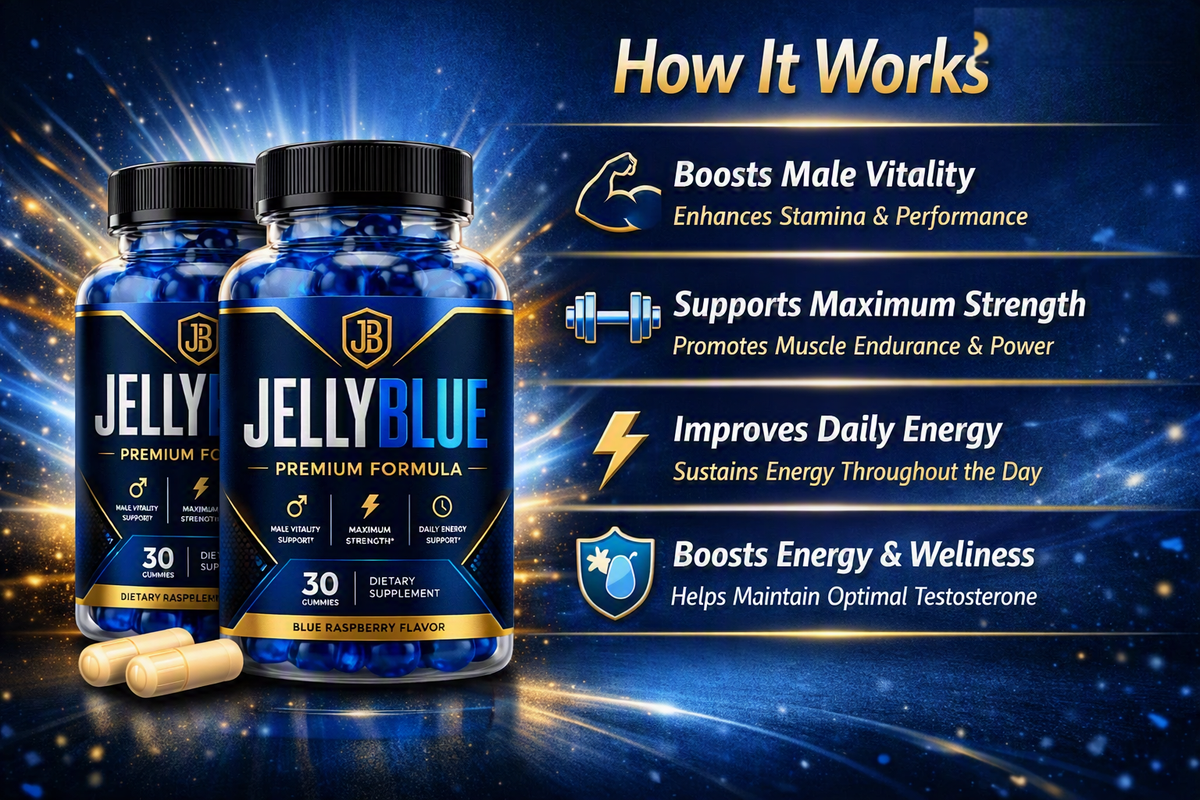
The seller describes three pathways. All three are real physiology. Whether this gummy delivers enough of anything to move them is the separate question the dose ledger answers.
Hormonal support. Tongkat ali is proposed to free testosterone from sex-hormone-binding globulin and support Leydig cell function, while reducing cortisol. This is the best-supported pathway here and the one where the dose is right.
Circulation and nitric oxide. L-arginine is a nitric oxide precursor, beetroot supplies dietary nitrate toward the same end, and grape seed proanthocyanidins support vascular tissue. The science is sound; the arithmetic is the problem, because L-arginine research uses grams per day.
Stress and cortisol. Ashwagandha modulates the HPA axis and reduces cortisol, which indirectly supports testosterone. This is genuinely well-evidenced — at 300–600 mg. The label carries 100 mg.
And the claim that needs a warning. The page states Horny Goat Weed inhibits PDE5 “the same mechanism targeted by prescription performance medications.” A seller cannot make that claim and omit the nitrate contraindication that comes with it.
Find your medication below. This is a summary of documented interaction categories for these ingredients, not a complete list and not medical advice — take the label to a pharmacist.
The seller states its Horny Goat Weed inhibits PDE5. PDE5 inhibitors are contraindicated with nitrates because the pair can cause a sudden, severe drop in blood pressure. If you carry a GTN spray for angina, this is a conversation with your prescriber, not a purchase decision.
L-Arginine is a vasodilator and beetroot nitrate lowers blood pressure. Stacked onto antihypertensives, that can push readings lower than intended, particularly on standing.
Grape seed extract and ginseng-family botanicals have documented effects on platelet function and anticoagulant control. Any new botanical belongs in a pharmacist conversation first.
Ashwagandha can increase thyroid hormone levels and has been linked to thyrotoxicosis case reports. If you take levothyroxine or have a thyroid condition, raise this specifically.
Ashwagandha can add to sedative effects. Botanicals affecting blood pressure and platelets are commonly stopped around two weeks before a procedure.
Ashwagandha has been associated with rare but documented cases of liver injury, and several national regulators have issued warnings on that basis.
A formula marketed on testosterone support is not appropriate where hormonal status is part of a medical picture. That decision belongs with your specialist.
The brand states the product is for adult men only. It has not been formulated or studied for anyone else.
Interaction risk drops considerably. The honest question then becomes whether the disclosed doses justify the price — see the dose ledger above.
You take no regular medication, you are an adult man, and you want nutritional support alongside sleep, training and diet rather than instead of them.
You take anything daily. The consultation is free and takes minutes. Photograph the label and go — especially if a heart medicine is on your list.
Fatigue or erectile difficulty that is new or worsening. Both can be early markers of cardiovascular disease, diabetes or low testosterone — all treatable.
The bar on each row measures one thing: how much published human research supports that ingredient for male energy, drive and vitality — not for antioxidant capacity in a dish, not for something adjacent. This is separate from the dose question above: an ingredient can have good evidence and still be under-delivered.
Multiple randomised human trials, including a 12-week study in men aged 30–55, report improvements in testosterone markers and self-reported vitality. Proposed mechanisms include displacing testosterone from binding globulin and reducing cortisol. Effect sizes are modest and trial quality is variable, but this is a real evidence base — and the dose on the label matches it.
The strongest adaptogen research in this category: randomised placebo-controlled trials reporting reduced cortisol, better sleep quality, and modest testosterone and strength gains. The catch is dose. Those results came from 300–600 mg of standardised extract daily, and this formula carries 100 mg.
A systematic review concluded maca has a positive effect on male sexual desire, independent of testosterone change, with effects typically appearing over 8–12 weeks. Well tolerated and genuinely on-topic — but the trials used grams per day, not the 100 mg on this label.
A legitimate nitric oxide precursor with a large sports-science literature on blood flow and endothelial function. Its weakness in a gummy is arithmetic rather than science: the researched intake is measured in grams, and oral L-Arginine also has poor bioavailability because of first-pass metabolism.
Dietary nitrate from beetroot has decent evidence for raising nitric oxide and improving exercise efficiency — but that evidence uses concentrated nitrate-standardised juice or shots. As an undisclosed amount of unstandardised extract, and one the sales page does not even list, there is nothing here to evaluate.
Icariin has genuine PDE5-inhibiting activity in laboratory assays, which is where the sales page's claim comes from. What is largely missing is human trial evidence at supplement doses. So the compound is real, the human proof is thin, and the mechanism being advertised is precisely the one that creates a nitrate contraindication.
Proanthocyanidins are well-studied antioxidants with reasonable vascular research, particularly for venous circulation and blood pressure. Direct human evidence for male vitality outcomes is essentially absent. It is a sensible ingredient in the wrong product.
What is missing is informative too. Zinc, magnesium and vitamin D all have more direct evidence for testosterone status than several ingredients on this label — particularly in men who are deficient, which is common. They are also cheap, which means their absence from a premium-priced formula is a choice rather than a constraint. If your interest here is genuinely hormonal, a blood test and correcting an actual deficiency will outperform any gummy.
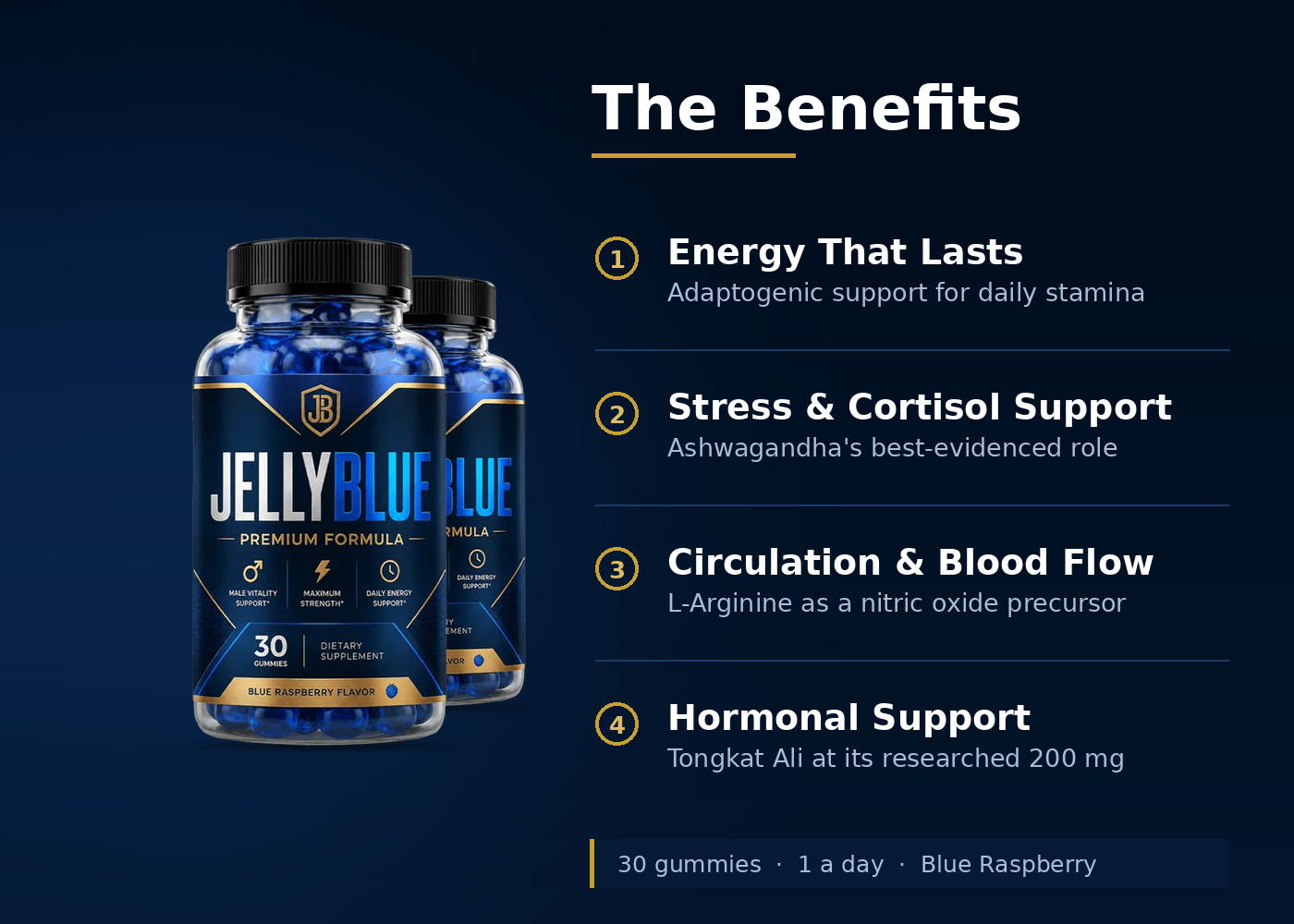
The official page promises “explosive energy,” restored drive, better body composition and a surge in confidence, mapped onto a week-by-week timeline. The ingredient research supports something smaller and slower. Here is the honest version.
| Buyer check | Published here | Official JellyBlue page |
|---|---|---|
| Ingredient count | Seven, from the panel | Six — beetroot omitted |
| Individual doses | Three published, four flagged undisclosed | None shown anywhere |
| “Clinically dosed” claim | Checked against each cited study | Asserted, not evidenced |
| PDE5 / nitrate warning | Full board, 9 categories | PDE5 claimed, contraindication omitted |
| Side effects | Listed by ingredient | “No dependency / side effects” |
| Refund conditions | 30-day minimum-use flagged | “No questions asked” alongside a condition |
| Review counts | Stated as unverifiable | 4,127 reviews, no platform linked |
| Pricing arithmetic | Verified — it is correct | Totals multiply correctly |
| “Save $780” basis | Identified as a $179 anchor | Presented as real savings |
Reflects the official JellyBlue marketing page as reviewed in August 2026. Pages change — verify current claims yourself.
“Four stars. Twelve weeks in, my sleep is genuinely better and I'm less wired at night — which I'd put down to the ashwagandha even at a low dose. The dramatic transformation the ads promise didn't happen. I'd buy again for the sleep alone but I went in with the right expectations because of this site.”

“I take a GTN spray for angina. I had no idea a herbal gummy could carry a PDE5 interaction until I read the warning here, and my pharmacist confirmed it was a bad idea for me. I didn't buy. That information was worth more than any discount code.”

“Three stars. The gummies taste great and I never missed a day, which is more than I can say for the capsules I've abandoned. But after two bottles I couldn't point to anything specific. Seeing the actual milligram amounts here explained why — I'd assumed ‘clinically dosed’ meant something.”

Testimonials are individual experiences and are not a guarantee of results. Portraits are illustrative stock images, not photographs of the reviewers. There is currently no independent third-party review record for JellyBlue on platforms such as the BBB or Trustpilot — we would rather tell you that than imply a track record that does not yet exist. Read the full independent review.
The seller recommends at least 90 days and says full benefits land at weeks 8–12. The refund window closes at day 60. That mismatch is the most useful thing to know before you choose — and it is why the six-bottle sale price is the best per-day value and the worst first purchase.
60-day supply
$158.00 total + shipping
90-day supply
$207.00 total · free US shipping
180-day supply
$294.00 total · free US shipping
The arithmetic checks out — the anchor does not. Unusually for this category, every package total on the official page multiplies correctly: $79×2 = $158, $69×3 = $207, $49×6 = $294. Credit where it is due. What does not hold up is the reference price. Every “you save” figure is calculated against $179 per bottle — a price that appears nowhere except as a crossed-out number. Compare per-bottle and per-day cost instead: roughly $2.63 a day on two bottles, $2.30 on three and $1.63 on six.



Package pricing verified 2026-08-19 against the official order page. Confirm your final total, including tax and shipping, before submitting your order.
The guarantee is real. “No questions asked” and “use it for at least 30 days” appear in the same policy, and the difference decides whether you get your money back.
The 60 days run from your purchase date, not delivery. Your order confirmation email is the record that matters. Diarise day 50.
The policy expects at least 30 days of daily use before a claim. That is a condition. Your real claim window is roughly days 30 to 60.
Refunds are handled by email to the seller's customer service address. Write inside the window and keep the timestamped copy as your evidence.
The seller's own recommended trial is 90 days; the guarantee covers 60. Decide inside the window that protects your money.
Before you submit your order: check the checkout page for any pre-selected subscription or upsell, and confirm the final total including shipping and tax. Note also that customer service runs through a generic third-party address rather than a brand domain, so keep every reply. Full detail on the refund policy page.
JellyBlue is a chewable gummy dietary supplement marketed to adult men for daily energy, stamina and general vitality. The serving is one gummy a day, and each bottle holds 30 gummies in a blue raspberry flavour, making one bottle a 30-day supply. The physical Supplement Facts panel lists seven actives: Tongkat Ali, Maca root, Ashwagandha, Horny Goat Weed, L-Arginine HCl, Beet root extract and Grape seed extract. It is a dietary supplement, not a medicine, and it is not FDA-approved. Full detail on the ingredients page.
Because the marketing copy and the physical panel do not match. The official page repeatedly says “6 powerful botanical actives” and names Tongkat Ali, Maca, Ashwagandha, Horny Goat Weed, L-Arginine HCl and Grape Seed Extract. The Supplement Facts panel also carries Beet Root Extract. Beetroot is not a problem ingredient — it is a reasonable nitric oxide contributor — but a page selling on ingredient transparency should list what is actually in the bottle. Read the panel you receive.
Partly, and the gap is measurable. The page claims “every active compound at its therapeutically effective dose” and criticises rivals for “underdosed fairy dust.” Of the three doses published on the label: Tongkat Ali at 200 mg is a genuine research dose. Ashwagandha at 100 mg is about one sixth of the 600 mg used in the trial the page itself cites. Maca at 100 mg is roughly 3–7% of the 1.5–3 g used in maca research. The other four amounts are not disclosed at all.
Not without asking a prescriber or pharmacist first. The seller's own copy says Horny Goat Weed inhibits PDE5 — the mechanism prescription performance drugs use — and PDE5 inhibitors are contraindicated with nitrates such as nitroglycerin and isosorbide, because the combination can cause a dangerous drop in blood pressure. L-Arginine and beetroot nitrate are additional vasodilators in the same gummy. This is the most important safety point on the page.
No, and no dietary supplement is. The FDA does not approve supplements the way it approves prescription drugs — there is no pre-market approval and no requirement to demonstrate efficacy before sale. Facilities are registered and subject to inspection, which is a different thing from being approved. Every supplement label carries the disclaimer stating that claims have not been evaluated by the FDA.
Three packages: two bottles at $158 total ($79 each) plus shipping; three bottles at $207 total ($69 each) with free US shipping; and six bottles at $294 total ($49 each) with free US shipping. That is roughly $2.63, $2.30 and $1.63 a day respectively. The totals multiply correctly, which is more than many pages in this category manage. The savings claims, however, are calculated against a $179-per-bottle reference price that nobody has paid. Current pricing is on the JellyBlue official website.
The seller's own guidance is 8–12 weeks for full effect, and recommends at least 90 days. That is a reasonable timeline for adaptogens: the ashwagandha and tongkat ali trials generally ran 8–12 weeks. Note the mismatch, though — the refund window closes at day 60, a month before the seller's own recommended assessment point. That single fact should shape which package you buy.
The page's comparison table claims “no dependency / side effects,” which is not a credible statement about any active botanical formula. By ingredient: ashwagandha has documented rare liver-injury reports and can raise thyroid hormone; tongkat ali can cause restlessness and insomnia; horny goat weed can cause dizziness and, per the seller's own PDE5 claim, has vascular effects; L-arginine and beetroot lower blood pressure; maca may affect hormone-sensitive conditions.
Yes — 60 days from the date of purchase, but read the wording. The guarantee section says to “use it every day for at least 30 days” before claiming, and the FAQ repeats a 30-day minimum. That is a condition sitting inside a policy described as “no questions asked,” and it means your real claim window is roughly days 30 to 60. Refunds go through contact@customercs.com. Full detail on our refund policy page.
Through the JellyBlue official website, which routes checkout through a third-party order page. No authorised retail listing has been identified — not Amazon, not Walmart, not pharmacy chains. Buying elsewhere puts your purchase outside the seller's order records, which is what the 60-day guarantee is administered against.
Not independently. The page advertises “over 47,000 satisfied customers” and a “4.9/5 based on 4,127 verified reviews,” along with a star-distribution chart — but none of it links to a third-party review platform. No Trustpilot, BBB or comparable record was found for this brand. A rating you cannot click is a graphic, not data. The same applies to “Rated #1 Male Vitality Supplement,” which names no ranking body.
There is no evidence the product does not exist or that orders go unfulfilled, and the pricing arithmetic is internally consistent. Our criticisms are narrower and specific: the sales page omits the seventh ingredient, claims clinical dosing while carrying ashwagandha at a sixth of the cited study dose, advertises a countdown timer that resets, quotes review counts with no linked platform, cites an endorsement from a “Men's Health Specialist” with no verifiable credentials, and makes a PDE5 claim without the nitrate warning that claim requires. Our full review weighs whether that adds up to a purchase worth making.
Clinical reviewer
Board-certified pharmacotherapy specialist with twelve years in men's health and cardiovascular practice. Signs off every safety claim on this site, including the nitrate contraindication and the interaction board above.
Editor
Consumer health editor. Verifies label data, published dosages, pricing and refund terms against primary sources before anything goes live. Read our editorial policy.